SOJOURNER MOBILE COFFEE

Coffee Talk

  • Home
  • About Us
  • Mobile Services
  • Gold Line
  • Online Store
  • Contact

6/25/2020

Cappuccino Contemplation

1 Comment

Read Now
 
Picture
Picture
Working at a variety of different cafes in both Milwaukee and Atlanta, I have seen a myriad of styles and methods behind preparing drinks. Each style and method are very personal to the barista in question, and therefore, those methods become a law to him or her, intimately attached to his or her own being. While I understand that feeling, I find so often that this attitude toward beverage preparation can be a real hindrance to the standardization of coffee across the globe. If you order a cappuccino in Frankfurt, Germany, for instance, will you receive that exact recipe once you order in Portland, Oregon? Maybe you wouldn’t. Although many might find this kind of diversity quite alluring, a lack of standardization promotes a lack of fastidiousness not only toward coffee preparation, but even in other areas of service and cafe maintenance; therefore, I would like to offer a bit of resolution.

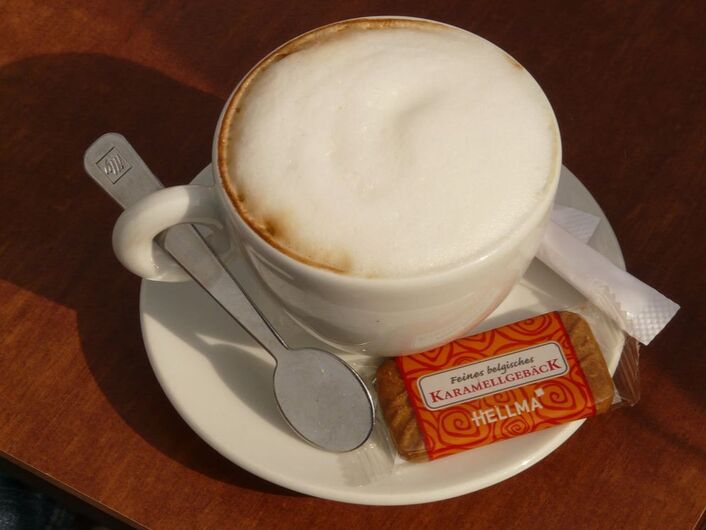
If you have ever ordered a cappuccino before, you may take note of the primary feature: a substantial layer of foam riding the surface. Having a clear vessel will even more clearly evidence this point. I would like to congratulate you on your result: you have received what you paid for. Unlike a latte, which consists of approximately 1/4 espresso, 5/8 steamed milk, and 1/8 foam, a cappuccino revels in its reputation as a foamy beverage.

Despite these quintessential characteristics, however, the success of a cappuccino in achieving such a ratio depends on a few nuances.
  1. The cappuccino must be served in an 8oz cup. I don’t care if you tell me you don’t have an 8oz to-go cup. You’d better get one! This cup is incumbent because of the customer’s perception. You are setting the standard of differentiation for them, that they would understand from the get-go that this drink is not a latte and thus does not come in the same size cup as a latte.
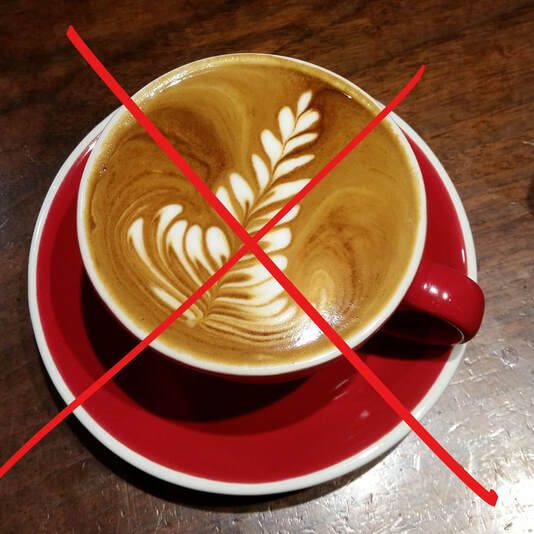
  2. Do not make a point of creating latte art! Do not try to exalt your ability to paint a pretty little flower in the customer’s drink. If your beverage is truly a cappuccino, why would someone expect to see “latte art" in there anyway? The closer you get to making a macchiato (which is another matter we will try to tackle), the less likely latte art will make any sense.
  3. Do not polish your milk! Despite what you may think, the same milk you use to make a cappuccino could very well be used to make a latte. Most everything depends on whether or not you polish. If you blend the milk, there goes those distinct layers. Although we don’t want to make a dry cappuccino unless someone asks for it, we should not presume that a wet cappuccino is the same as a latte.

To some people, terms are just labels and categories ascribed to ideas, shackling them to one person’s point of view and thus limiting their greater potential. As limiting as these words may be, they also preserve the foundation upon which new discoveries are built. Remove the foundation, and be certain that the potential energy of everything above it will result in catastrophe. We can glean from experience and learn from the past. That is why I feel the need, at least with regard to cappuccinos, for laying down the law.

Share

1 Comment

6/15/2020

Matt’s “Sojourney”

0 Comments

Read Now
 
Picture
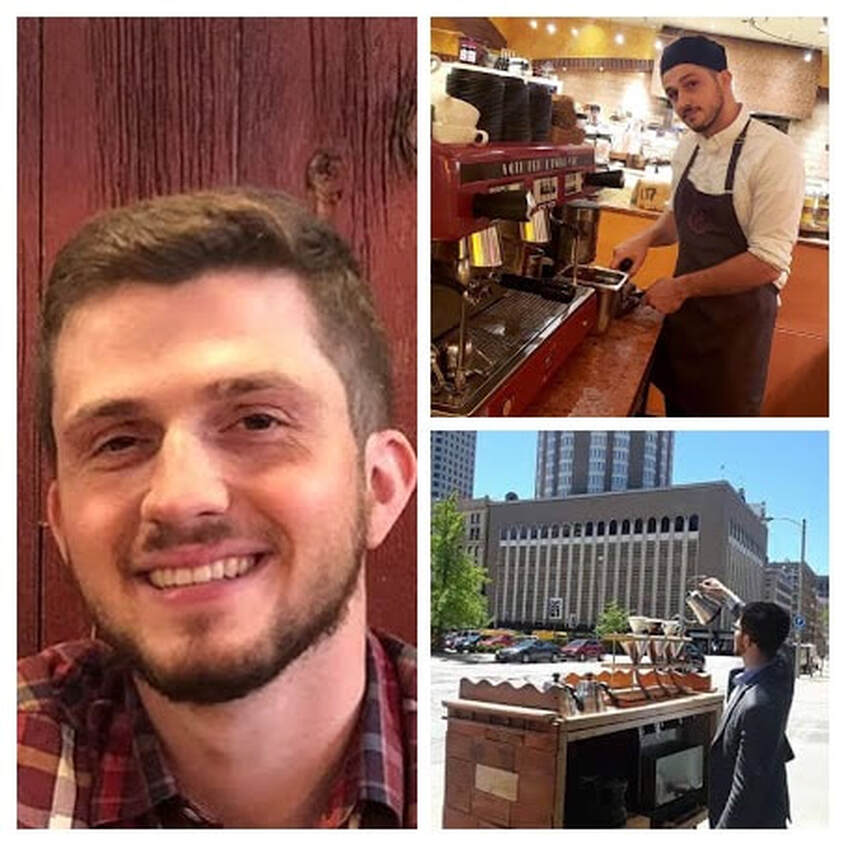
​We started with pour overs. If you’ve ever been in Northern or Southern California in need of coffee, you’ve probably happened upon a number of shops providing an array of specialty beverages based entirely on drip coffee. Accomplishing this is quite a marvelous feat, likely the result of collective experience and creativity. Such shops are fortunate to be located in the land of sunshine and experimentation (aka California). Most coffee shops outside of California usually use espresso as a base for their coffee offerings. Due to our love for the pour over, this proved to be a good starting ground for my training, and also Sojourner early operations. 

In winter 2018, I had the opportunity to work at a small cafe on the south side of Milwaukee. Driven to broaden my coffee horizons, the opportunity opened the door for formal barista training and greater understanding of the coffee tastes of the local community. From there, I entered into a world full of techniques and the language of coffee including pulling shots, milk texturizing, and latte art.

Since that time, I’ve gained experience from several coffee chains and shops in the Milwaukee and Atlanta metropolitan areas, including managing Sojourner’s Pop-up cafe. We’ve trained baristas for private events and catering, maneuvered our coffee cart through Milwaukee’s business and university districts, and manage our coffee operations both on-the-ground and remotely all the while making good coffee and sharing it with others. It’s been an adventure that I couldn’t have anticipated and the ride has been more than interesting. 

Much thanks to all who have been on this journey with me and with us at Sojourner. Looking forward to what’s ahead!

Share

0 Comments

6/2/2020

Interview with Sonic Dutch

0 Comments

Read Now
 
Picture
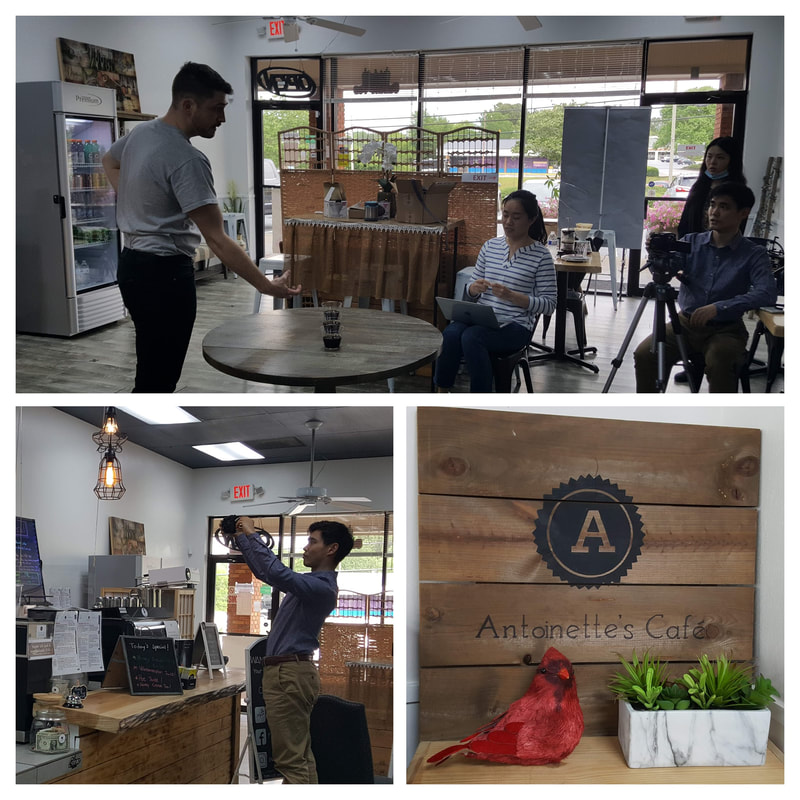
We cannot begin to thank the team from Vizstarter for the opportunity to share our love of coffee and our newfound appreciation of their product, Sonic Dutch. For more information  on the cold brew coffee maker, check out their kickstarter page.  

I never anticipated enjoying coffee produced in under ten minutes with just cold water. Despite my skepticism, and as you’ll see in the video below, Sonic Dutch revolutionized my view toward cold brew. I see there is hope for the method after all :)

Share

0 Comments
Details

    Author

    Sojourner Mobile Coffee

    Archives

    June 2020
    May 2020
    April 2020
    June 2019
    December 2018

    Categories

    All

    RSS Feed

Proudly powered by Weebly
  • Home
  • About Us
  • Mobile Services
  • Gold Line
  • Online Store
  • Contact